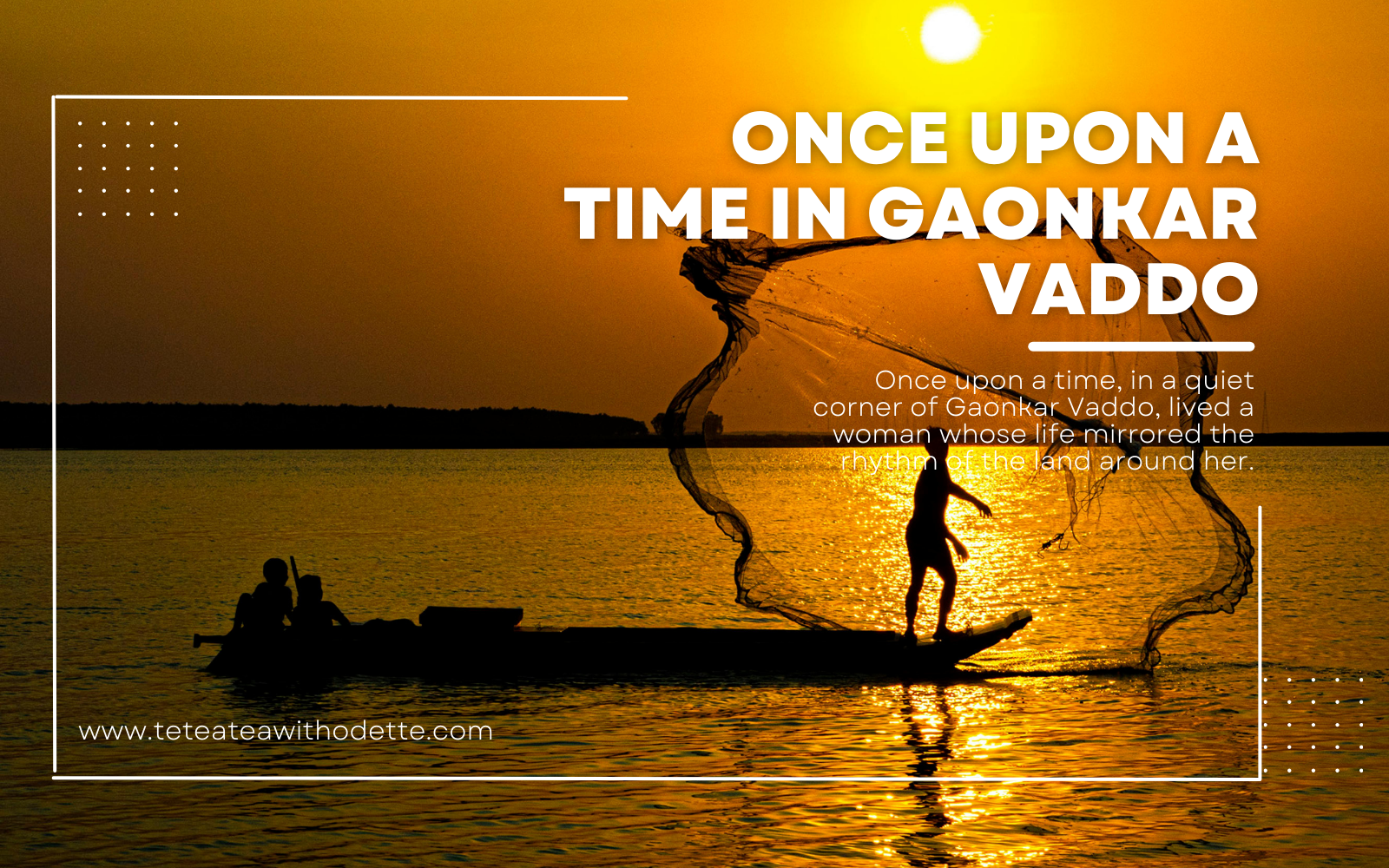
Once upon a time, in a quiet corner of Gaonkar Vaddo, lived a woman whose life mirrored the rhythm of the land around her.
She was feisty, outspoken, and well into her sixties, yet every morning she made her way to the cashew sorting factory, just as she had done for decades. Her name was Chandra Venkatesh Prabhugaonkar, and hers was a life shaped by work, faith, family, and food.
Gaonkar Vaddo itself told a story of balance. The road that led to Chandra’s home passed through a predominantly Hindu neighbourhood, once owned largely by the Prabhugaonkar family, and continued past a mosque and homes belonging to Muslim families. Over time, many shops that once belonged to Muslim households came to be run by Hindu Goans, yet the harmony of the place remained intact. Faiths coexisted, lives intertwined, and everyday life carried on without friction.
Chandra had been born in Bicholim and married into the Prabhugaonkar family. Her husband’s ancestral home stood next door, complete with the family deity. Every year during Ganesh Chaturthi, nearly five hundred members of the extended family would return from across Goa to gather under one roof. It was a reminder of a time when families were large, rooted, and inseparable.
Her home was modest, but rich with memory. The newer kitchen stood beside the old one, which had been relegated to a storeroom, yet never abandoned. During festivals, Chandra would still return to the old ways. She demonstrated how the chool was lit using the phukane, while her granddaughter Ruthwa watched with quiet fascination. These methods were not performances; they were habits carried forward without question.
We sat with her over simple snacks, are chivda, cashew-shaped biscuits, and nankattai, nibbling as she spoke of the past. She had six children. Three were born at home, delivered with the help of the voigeen, the midwife who lived nearby, assisted by the women of the household. The remaining three were born in hospital, a sign of changing times. It had been the era of joint families, shared responsibilities, and unspoken systems of care.
When we noticed the black thread around Ruthwa’s neck, Chandra spoke of beliefs that once governed daily life. Children, she said, were often taken to the dishtkar, a woman believed to ward off unseen spirits. Faith was woven deeply into everyday decisions, and healing was as much spiritual as it was physical.
Lunch was served quietly. Rice, bhangda hooman made with fish heads for flavour, fried fish tails coated in masala, and a humble preparation of tambdi bhajji. The food was simple, nourishing, and deeply local.
As we ate, Chandra spoke of her childhood. Like many women of her generation, she had worked in the cashew factory from a young age, sorting and grading nuts by hand. They were paid one rupee for fifteen days of work. Using bamboo sticks, they cracked shells, their lives closely tied to the cashew tree that dominated the taluka.
Even then, years later, she continued to work alongside a group of local women. Little had changed in the vaddos. A few modern amenities had found their way in, but life moved to familiar rhythms, unhurried and unchanged.
Cashew had long shaped livelihoods in this region. As we prepared to move on to Sattari, another taluka known for its abundance of cashew trees, one couldn’t help but wonder how deeply profession, place, and identity were once intertwined, and how each taluka carried its own quiet story.
This was not just Chandra’s story. It was a snapshot of a way of life that existed not very long ago, yet already feels distant.
About the food
The tambdi bhajji served that afternoon was a simple, nutritious accompaniment, made the way it had always been.
The recipe for this dish is shared separately, as a culinary record of the food that accompanied this memory. You can find it here
One thought on “Once Upon a Time in Gaonkar Vaddo”