There are spices that season food, and then there are spices that define a culture. Turmeric belongs to the second category.
In Indian kitchens, it is rarely measured with precision, rarely discussed with ceremony, yet almost always present. A pinch in the tadka, a rub on fish, a base note in curries, a warm stir into milk. Turmeric is not just added. It is assumed.
And yet, this humble golden powder carries centuries of culinary wisdom, medicinal belief, ritual symbolism, and regional identity.
A Root Before It Was a Powder


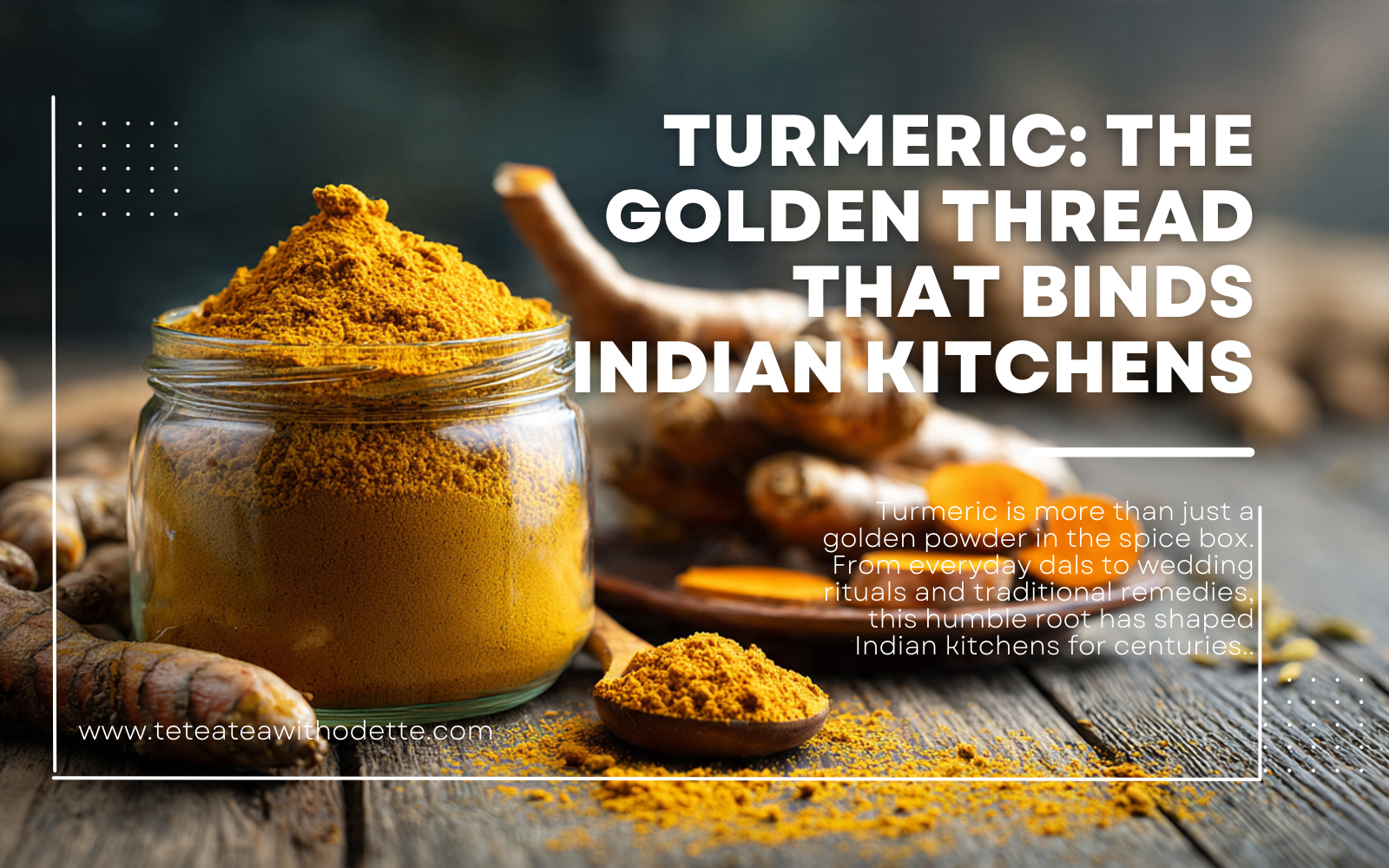
Turmeric begins as a rhizome, a root-like underground stem from the Curcuma longa plant. It looks similar to ginger but reveals a deep, vibrant orange when cut open. That colour is not cosmetic. It is its signature.
The rhizome is boiled, dried, and then ground into the fine powder that sits in almost every Indian spice box. In many homes, especially in earlier generations, this grinding was done in bulk once a year, often sourced directly from farmers.
The flavour is subtle. Slightly bitter, earthy, warm. It does not dominate like chilli or perfume like cardamom. Instead, it rounds flavours, stabilises gravies, and gives dishes their golden identity.
More Than Just Colour
Turmeric is often mistaken as a colouring agent. It is far more than that.
In a simple dal, it adds depth and warmth. In fish curries along the coast, it balances tamarind and coconut. In dry sabzis, it ties together spices that might otherwise compete.
Across India, turmeric behaves differently. In Goan cooking, it partners beautifully with kokum and coconut. In Maharashtrian cuisine, it anchors everyday bhajis. In South Indian sambar, it blends seamlessly into lentils and tamarind.
It is rarely the hero. But without it, something feels incomplete.
Watch the Conversation
“In this episode, we explore turmeric beyond the spice box. From its culinary role to its cultural significance, here is our deep dive into why this golden root has remained timeless.”
The Cultural Weight of Turmeric


Turmeric is one of the few spices that crosses into ritual.
It is applied during haldi ceremonies before weddings, symbolising purification and blessing. It is mixed into warm milk when someone is unwell. It is applied to cuts and bruises in many traditional households.
For generations, turmeric has been associated with healing, protection, and auspicious beginnings.
Even in daily cooking, that symbolism continues quietly. A new bride stepping into her kitchen, a mother preparing dal for a sick child, a grandmother adding a pinch “just because it’s good for you.” Turmeric carries emotional memory.
The Science Behind the Belief
Modern science has caught up with tradition in many ways. Curcumin, the active compound in turmeric, is known for its anti-inflammatory and antioxidant properties.
While turmeric is not a miracle cure, it does support digestive health and overall wellness when consumed regularly as part of a balanced diet. That daily pinch, over years, is what builds its impact.
It was never meant to be dramatic. It was meant to be consistent.
From Farm to Fine Dining
Today, turmeric has travelled far beyond the Indian subcontinent.
It appears in wellness lattes, cold-pressed juices, marinades, salad dressings, and even desserts. Chefs around the world use it for both flavour and its unmistakable golden hue.
Yet in Indian kitchens, it remains grounded. Familiar. Unpretentious.
Perhaps that is its greatest strength.
A Spice That Stays
Turmeric does not shout. It settles. It warms. It stabilises.
In a world that constantly searches for the next superfood, turmeric reminds us that some of the most powerful ingredients have always been within reach.
It is not new. It is not trendy. It is timeless.
And maybe that is why it continues to stay.