

Now what must be considered as ‘fun’ for one person might not be so for another. So while visiting historical monuments is ‘fun’ for one, lazing on the beach could be ‘fun’ for someone else. Or if one has ‘fun’ dancing on a boat on the River Mandovi, another one could have ‘fun’ just drifting along the backwaters of the very same river. Can one place provide it all? Yes, there is…
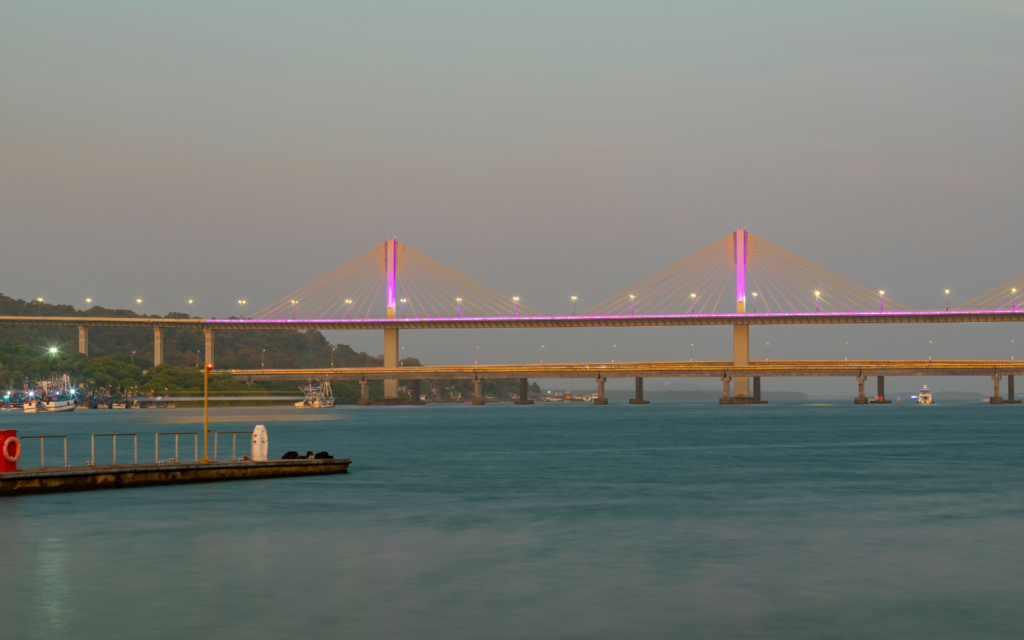
And has anyone stopped to think why one place in this tiny state is called Old Goa? And another named after a woman called Dona Paula? Or perhaps the fact that the capital city of Goa, Panaji, had many corrupted versions and explanations like ‘Ponjy’ said to mean ‘the land that never floods’, or perhaps ‘Panch yma afsumgary’ which meant the five magnificent castles of Adil Shah. Goa is steeped in history and folklore.
Does one realise that the cultural experience one gets in Goa would also depend upon the places one would visit. A drive towards an old temple town called Ponda could help you savor the most traditional Hindu Goan food at a spice garden. Enjoy a meal as you inhale the aroma of fresh spices… after the visit to the temple of course.
So if one had a week to explore the different facets of Goa, where would one go? Would beaches alone give you an experience of a lifetime? Would a regular cruise down the River Mandovi let you experience the rich fauna……and foliage, the peace and serenity of the backwaters? Could one perhaps get a glimpse of the descendants of Adil Shah’s crocodiles (yes the same ones that kept the Portuguese stranded at the mouth of the Mandovi River for months), basking in the shallow muddy marshes?
How does one pack in the different facets of Goa? Like a prism it reflects its warmth, iridescent beauty and different aspects of its rich cultural legacy… yes it is important to know about Goa and its various places of interest to be visited.
Goa is divided into 12 talukas across two districts: North Goa (Pernem, Bardez, Bicholim, Sattari, Tiswadi, Ponda) and South Goa (Salcete, Mormugao, Quepem, Sanguem, Dharbandora, Canacona). These talukas serve as the primary administrative sub-divisions for revenue and governance
There is an interesting story of the people of Salcete, this was when electricity was an unheard option and people had to light the oil lamps at night. They never ate crabs at night cause they felt that it was a time consuming activity and more oil would burn at the dinner tables. Thrifty people indeed… or maybe it was too dark to tweeze out the meat from the shell. Perhaps like all folklore it has added zest to the planning of the meal in Goan houses.
Now the Hindu Goans loved their fish… and chicken too. But one thing that they would not eat (besides beef of course) was the pig. They would hunt in the forests for wild boar which would land in the Xacutti cooking pots, but never venture near the table serving the most exquisite delicacies of a roast pigling or the pickled version of sorpotel. Why?? The Portuguese had brought in the pig to clean the sewers of the city. To them it was an unclean animal. And so pork never ever featured on their menu’s.
Besides these places mentioned there are picturesque villages in the hinterland which can be approached by boat on the Mandovi River. Brittona, Charao, Narve, Pilgao, Amona, Marcel, St Estevan Jua, Cumbajua, Madkai, Durbhat, Shiroda, Curtorim, Rachol, Loutolim, Cortalim. And then the beaches….. miles and miles of sand and sea, what more could one wish for. Arrosim, Baga, Bogmalo, Calangute, Colva, Mobor, Morjim, Varca, Vasco each one unique and providing a different facet of sun, sand and sea.
And like the places, the food too adds its own cultural advantages… Hindu Goan, Christian Goan and even Portuguese.
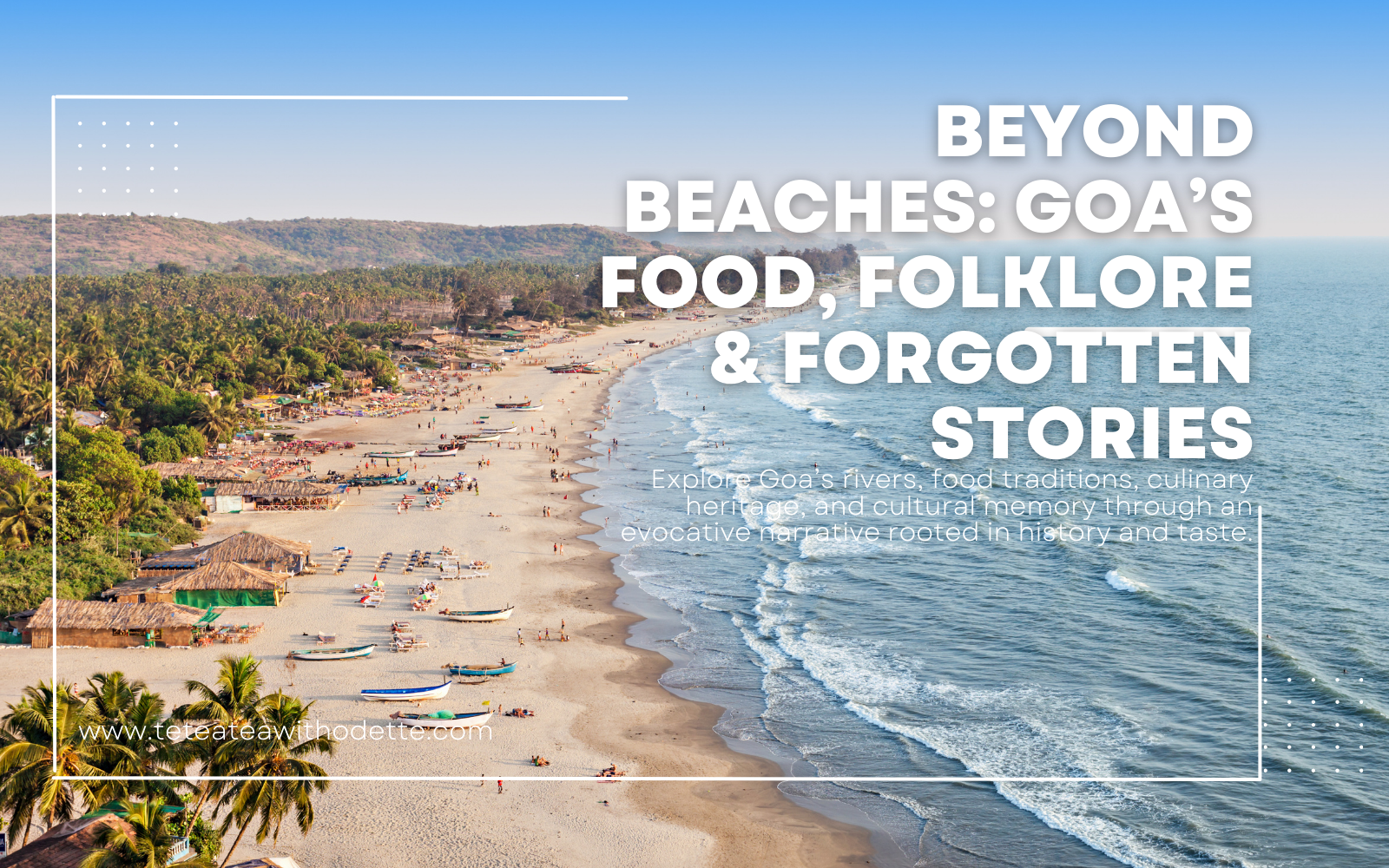
Coming back to those beaches…. from shacks that serve every conceivable cuisine of the world, these areas of ultimate bliss (one wonders if the legend of that Indian Classic the Suta Samhita, describes this part of Goa) perhaps the tourists who throng these areas believe so. Morning, noon and night they throng the shores, either to savor the thrill of the water as they plunge into its velvety embrace especially during the months of October to February or to soak in the warmth of the benevolent rays of the sun under the thatched beach umbrella, a glass of chilled beer condensation on the sides, within reach. But unknown to many there is beach to suit the needs of every individual, and this adds up to the whole Goan holiday.
So Goa with its remnants of a few stately colonial mansions interspersed with modern architecture, with its noise and bustle – sightseeing, shopping, museums, boat rides and casinos, hinterland Goa steeped in history and romance, the cultural dimensions enthrall and beckon. And last but not least the beaches, lakes and waterfalls and the ‘wildlife’ of Goa (no not the rave parties that are exclusive to just one area).
Now why does the jackfruit come back to the forefront? It’s an interesting fruit. You see the Goans have learned to use every benefit of that tree. The fruit besides eating can be made into a delicious snack which is called ‘phonus papad’ (jackfruit papad), the seeds are added to make a lovely vegetable preparation Khatkhate or even a lentil like Moga gaathi (a sprouted green gram in thick gravy). Over a period of time Portuguese dishes too incorporated this part of the fruit – Porco com Castanhas de Jaca (Pork with Jackfruit seeds) where the seeds attained the texture of potatoes.
Would one imagine that the leaves could be used too? Oh yes! For flavoring in the traditional dessert of ‘soji’ served at celebrations, or used as a base for steaming a very popular sweet preparation called Hole’ (rice paste, jaggery and grated coconut) served at the San João feast.
Goa too as a whole has much to offer… not only sun, sand and sea. If one has to choose a holiday to remember the experience should include – fun… food… frolic.
Read more about Goa here
Follow my journey on Instagram