

The Historical Significance of Goan Food
To understand the food of Goa, one must first understand the many people who have occupied, shaped, and passed through this land over centuries. Goan cuisine did not emerge in isolation. It is the result of geography, migration, belief systems, trade, conquest, and adaptation, all layered gently over time.
Legends, Land, and the Birth of Goa
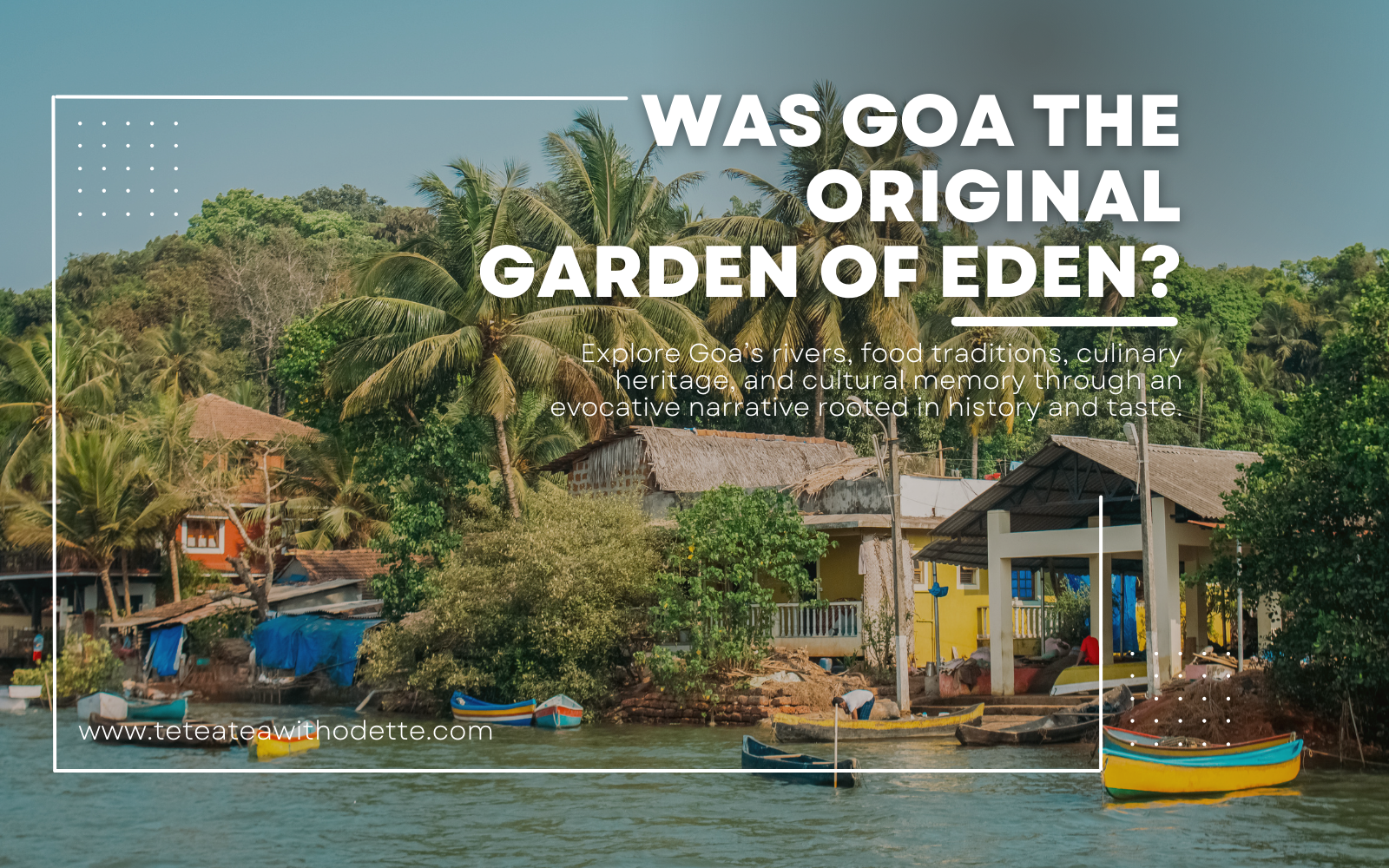
Legend and history often blur when one speaks of Goa’s origins. Hindu scriptures recount that Goa was created by Parashurama, the sixth incarnation of Lord Vishnu, who cast his axe into the sea and commanded the waters to recede. The reclaimed land came to be known as Konkan, derived from kona meaning corner, and kana meaning piece, the “corner of the earth.” The southern Konkan later became known as Govarashtra, today’s Goa.
Ancient texts refer to Goa by many names. In the Mahabharata, it is described as Gomanta or Goparashtra, a land of cowherds and nomadic tribes. Other texts mention Gopakapuri, Govapuri, Gomanchala, and even Aprant. The Suta Samhita speaks of Govapuri as a sacred kshetra, a place believed to cleanse sins and grant spiritual merit. These beliefs still echo in the region’s enduring cultural and ritual practices.
Settlements, Communities, and Early Foodways
Another legend speaks of the Gaud Saraswat Brahmins, who originally lived along the Saraswati river. When the river dried, Parashurama is believed to have created land along the coast and guided them to settle there. They established communities along the Zuari and Mandovi rivers, forming settlements in Bardesh, Tiswadi, and Sashti. These divisions still exist today, shaping Goa’s social and culinary geography.
Food habits grew from the land they settled on, deeply influenced by river systems, fertile soil, and seasonal cycles.
Dynasties, Faiths, and Culinary Layers
Recorded history places Goa as part of the Mauryan Empire in the third century BC, under Emperor Ashoka. Buddhist monks played a role in shaping early religious life, evidenced by the rock-cut caves of Arvalem and the discovery of ancient Buddhist artefacts.
Over the centuries, Goa passed through the hands of many rulers, the Satavahanas, Bhojas, Konkan Mauryas, Chalukyas, Shilaharas, Kadambas, the Delhi Sultanate, the Vijayanagara Empire, the Bahmani Sultanate, and finally the Adil Shahis of Bijapur. Each ruling power left behind cultural and culinary traces, even if subtly.
In 1510, the Portuguese defeated the Bijapur rulers with the help of a local ally, Timoja, beginning a 450-year colonial presence that would permanently reshape Goa’s food landscape.
Ingredients That Travelled and Stayed
Portuguese trade routes introduced ingredients previously unknown to the region. Potatoes, tomatoes, chillies, cashew nuts, pumpkin, papaya, pineapple, chikoo, guava, and passion fruit slowly became embedded in Goan kitchens. Mango varieties developed through grafting were named after Afonso de Albuquerque, later known locally as Aphoos.
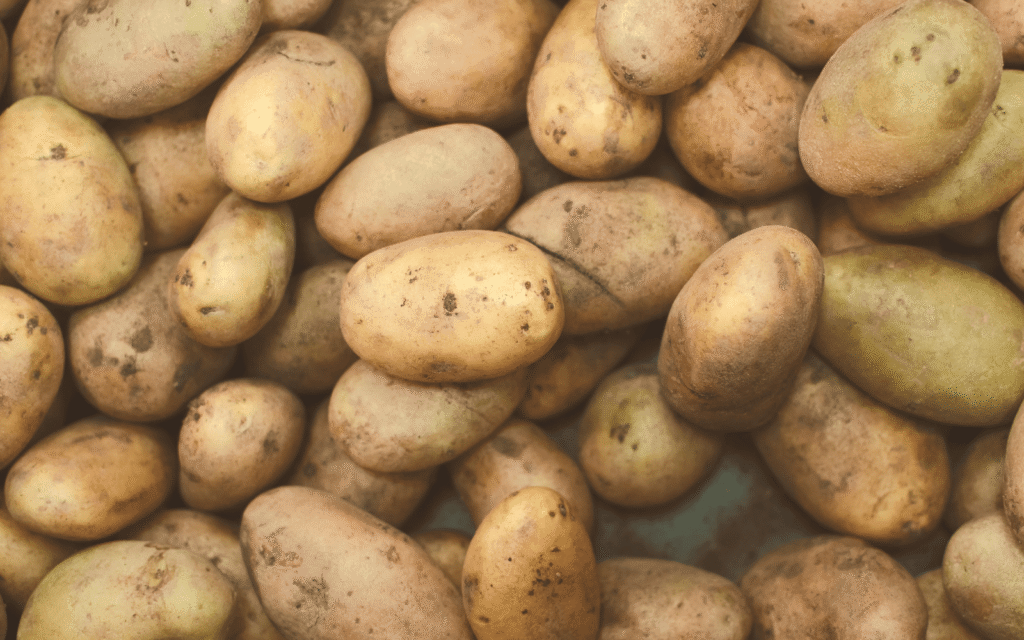
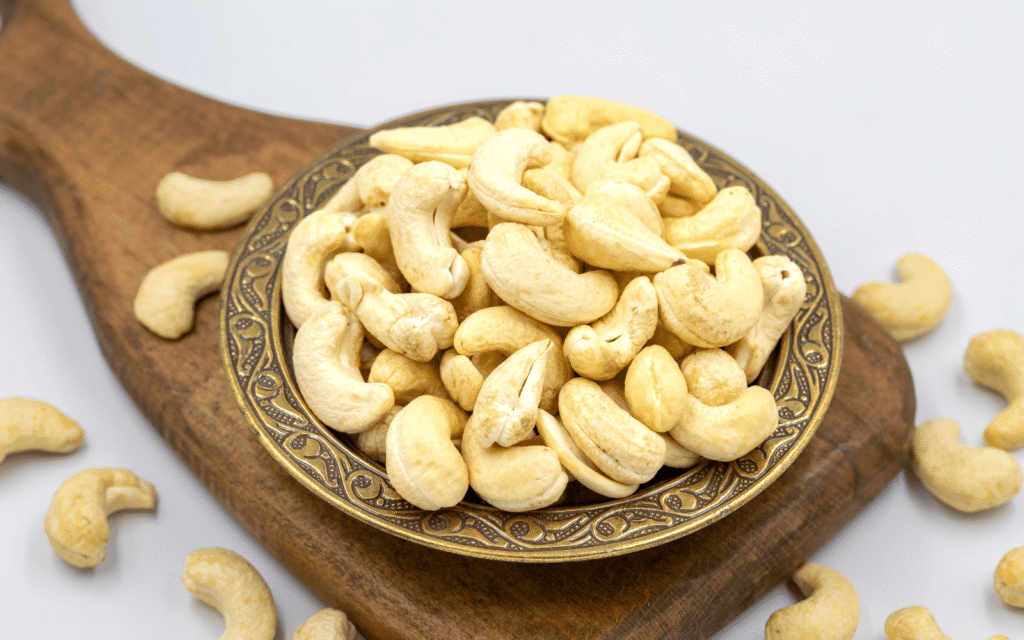
These were not imposed ingredients. They were adapted, absorbed, and reinterpreted through local knowledge and cooking techniques.
Beyond Vindaloo: The Diversity of Goan Cuisine
Internationally, Goan food is often reduced to a handful of dishes like Vindalho. Yet Vindalho itself bears little resemblance to the Portuguese term it derives from, vin meaning wine and alhos meaning garlic.
Goa’s culinary identity extends far beyond this. Hindu Goan cuisine offers preparations like Khatkhate, a vegetable medley rooted in seasonality. Muslim Goan traditions include dishes such as Sheer Kurma, prepared with coconut milk and jaggery rather than dairy and sugar in earlier times.
Coastal geography brought abundant seafood into daily cooking. Fish like Chonak (sea perch), Ambotik preparations, and Talle talle (fried milkfish) became staples, shaped by proximity to rivers and sea.
Vegetarian cooking in Hindu households often excluded onion. Garlic was a part of their food except for religious ceremonies when the food was in its pure satvik form. They did rely on coconut, raw bananas, mangoes, and local greens. Dishes such as Ros, Alsande Tonak, Aamadyachi Karam, and Harve Kele Karam reflect food rooted deeply in the land.
Sweet Endings and Slow Traditions
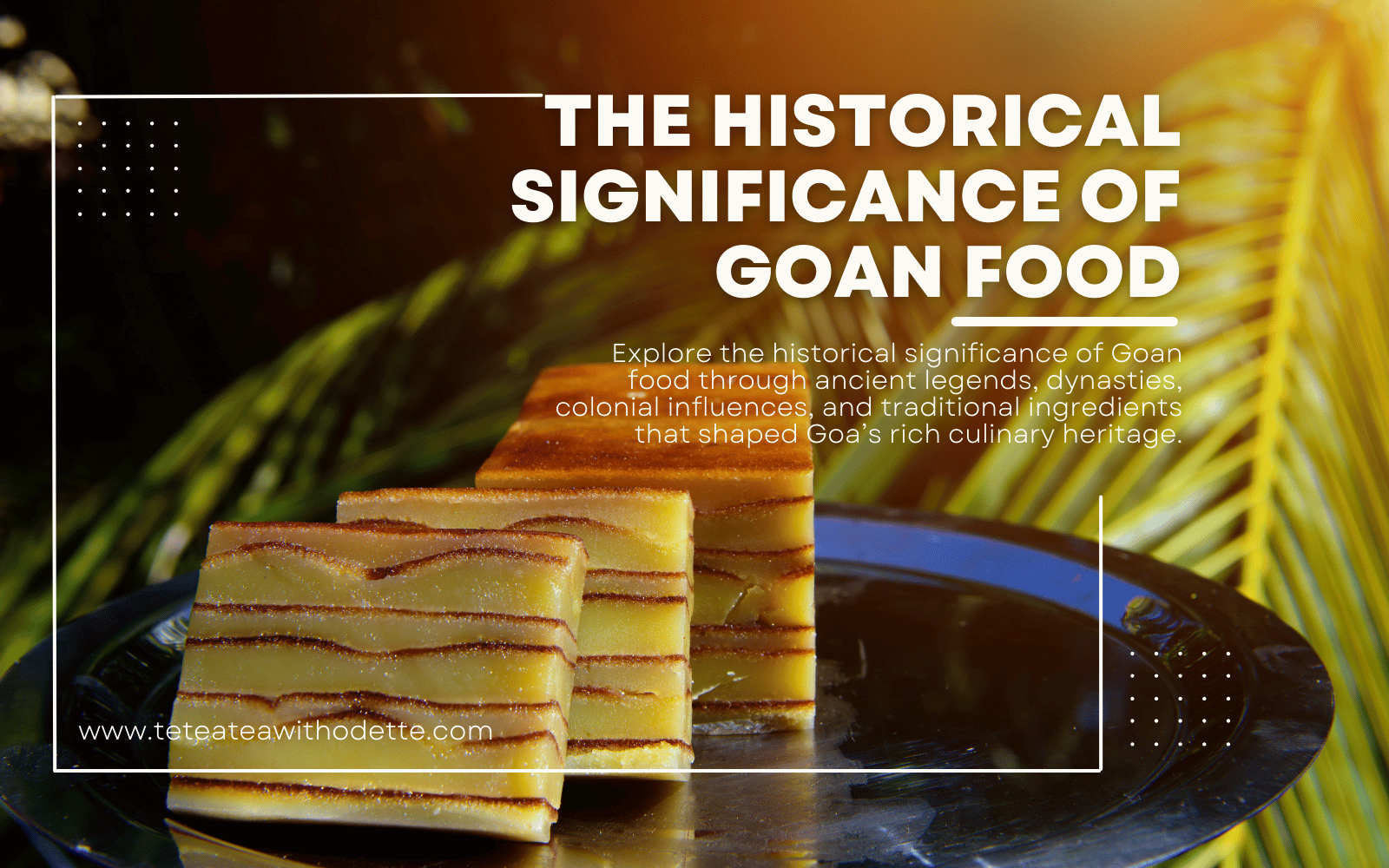
To understand Goa’s layered culinary past, one might look no further than Bebinca. This iconic dessert is built layer by patient layer, using coconut milk, egg yolk, sugar, nutmeg, cardamom, and clarified butter. Each layer is slow-cooked over charcoal before the next is added, requiring time, attention, and restraint.
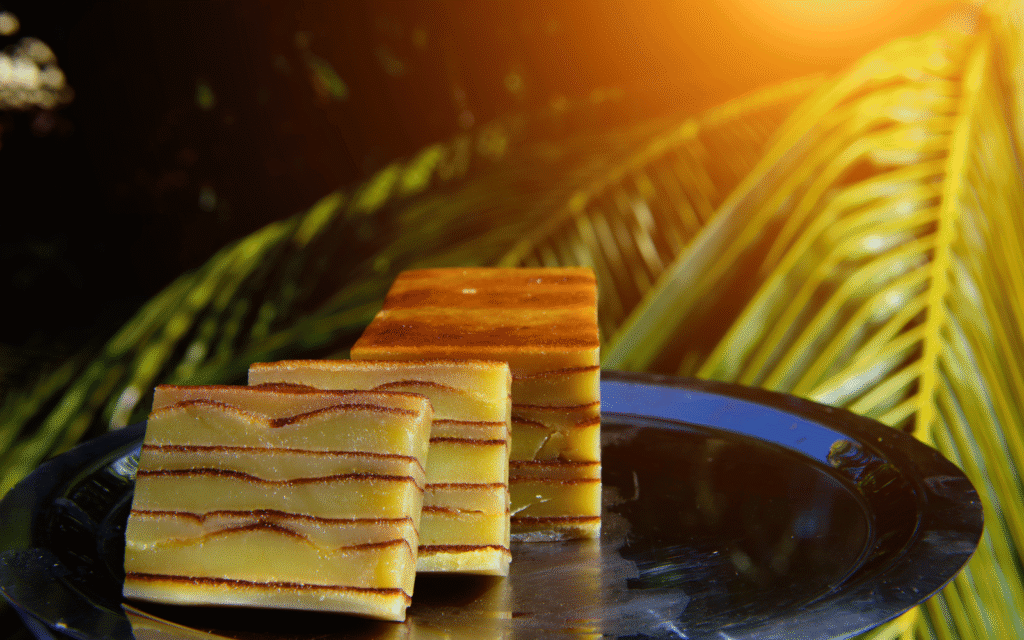
Like Goa itself, Bebinca is not rushed. It rewards patience.
A Cuisine Shaped by Time
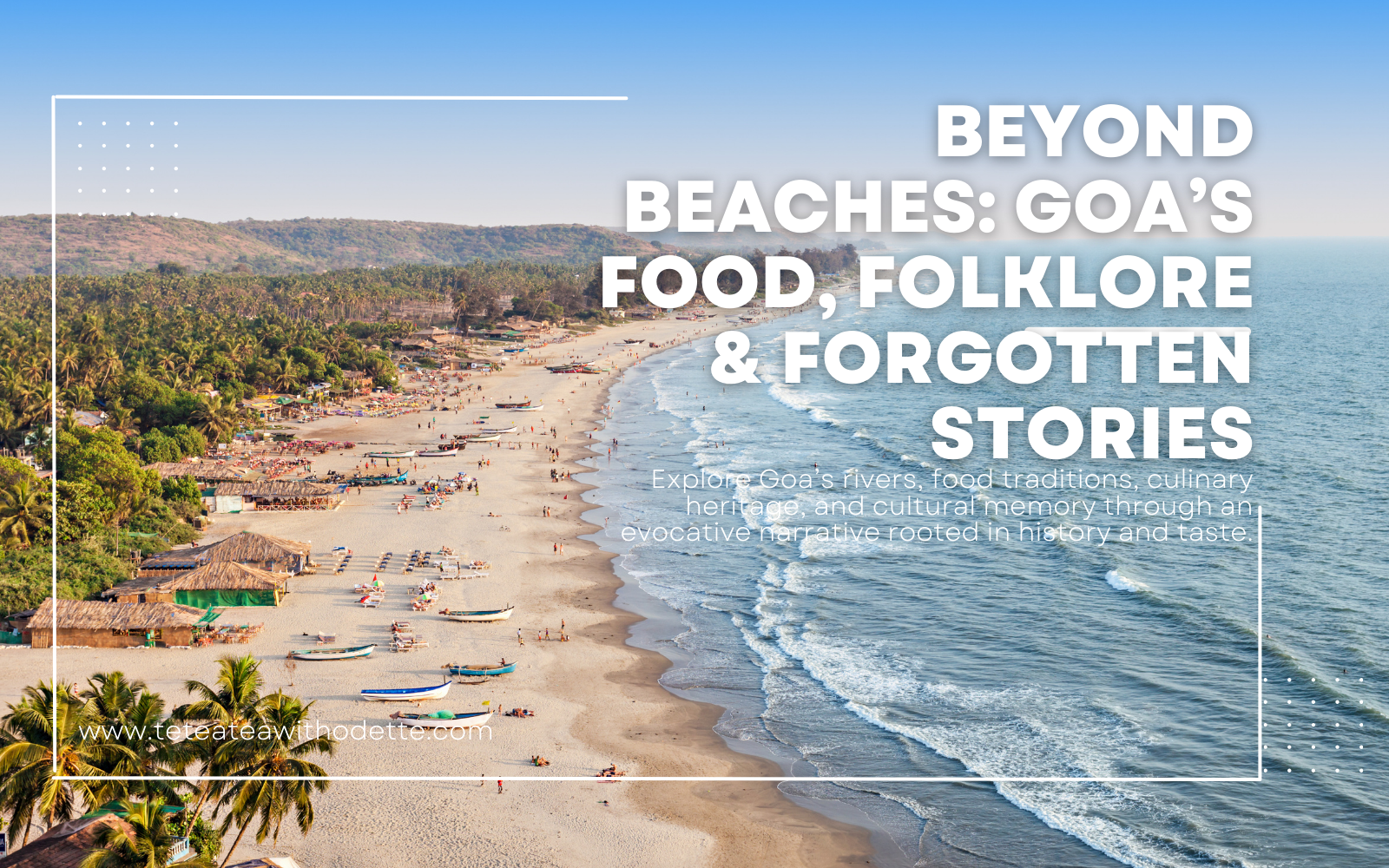
Goa’s long coastline, river systems, and fertile soil have created a cuisine that is both diverse and deeply rooted. While modern restaurants cater to cosmopolitan tastes, many kitchens still preserve recipes learned from grandmothers, tied closely to seasons and ritual calendars.
Goa was never meant to be understood in fragments. Its food, like its history, is best understood as a continuum, shaped by centuries of influence, memory, and quiet adaptation.